This morning, while sipping my coffee, I found myself staring into the future.
Not in a prophetic sense. I’d say more in a chicken sense.
A few months from now, the fluffy little chicks currently occupying far more of my time and attention than they seem to appreciate will be fully feathered hens living in the coop.
There will be another skunk in the family.
Our two mini dachshunds will still be convinced they should be first in line for every meal, every treat, every cuddle, and quite possibly every decision made within the household.
The cat will continue pretending she has no need for humans while simultaneously supervising all human activity.
As I sat there contemplating my future, I pictured myself trudging fifty yards through an Ohio snowstorm before sunrise. Snow blowing sideways. Coffee clutched in one hand. Feed bucket in the other, and let’s face it— more than likely…still sporting my cozy jammies.
I’m sure to be found muttering encouragement to myself while wondering which life choices led me into braving Ohio winter to shepherd a flock before dawn.
The image made me laugh.
Then it made me think.
Because years ago, I might have viewed all of those responsibilities differently.
As obligations.
As interruptions.
As one more thing added to an already crowded list.
But age has a way of refining perspective.
The older I become, the more aware I am that every living thing around me is a miracle entrusted to my care for a season.
The dogs.
The cat.
The skunks.
The chickens.
The people I love.
Even the strangers whose paths briefly intersect with mine.
All are creations of God.
All carry value.
All deserve dignity, compassion, patience, and grace.
Not because they earn it.
Because they were created by the same hands that created me.
Perhaps that awareness is one of the unexpected gifts that hardship leaves behind.
Most people ask:
“How do I survive what happened to me?”
A few eventually ask:
“How do I heal from what happened to me?”
But perhaps the deeper question is this:
“How do I allow what happened to me to become a source of light for others?”
That is where wisdom begins. Not when pain disappears. Not when wounds are forgotten. Not when life suddenly becomes easy.
Wisdom begins when we stop focusing on what suffering took from us, and begin asking what it left behind— because every hardship leaves something.
- Patience.
- Empathy.
- Humility.
- Strength.
- Perspective.
- Compassion.
We spend so much time mourning what was lost that we sometimes overlook what was forged.
The deepest valleys of our lives often teach us how to recognize someone else’s.
- The grieving parent.
- The exhausted caregiver.
- The frightened child.
- The lonely neighbor.
- The neglected.
Once we have walked through darkness ourselves, we become better at seeing those who are still searching for their way through it.
Perhaps that is part of our calling.
Not merely to heal, but to become a source of healing.
To take whatever life places into our hands—joy, grief, faith, loss, love, laughter, disappointment, triumph, tragedy—and return it to the world in a form that helps someone else carry their load a little farther.
What if that is the true stewardship of a life?
Not simply managing our own journey, but transforming our experiences into something useful beyond ourselves.
Turning wounds into wisdom.
Pain into compassion.
Loss into understanding.
Brokenness into grace.
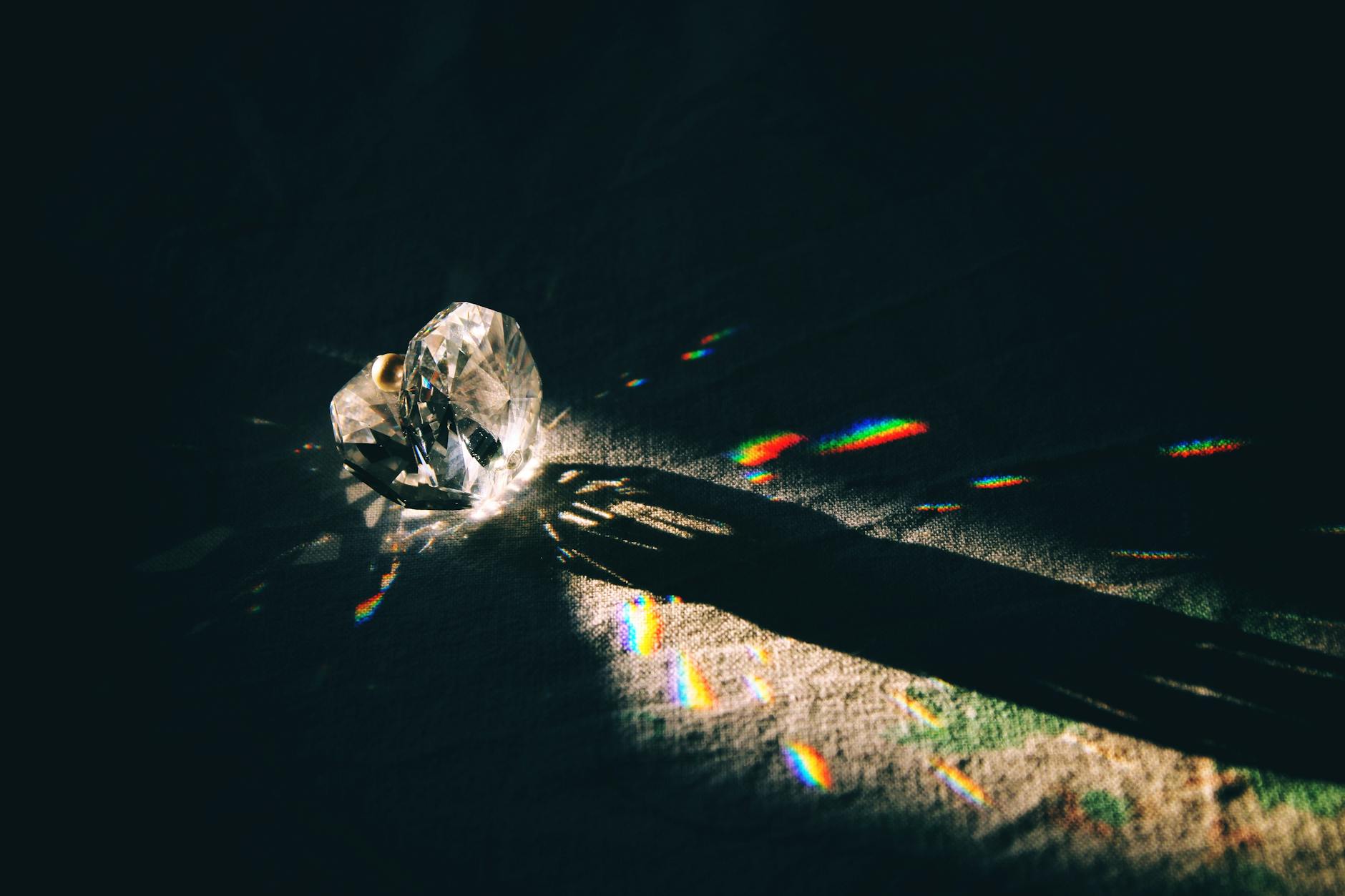
A prism does not create light. It receives light and refracts it outward, transforming a single beam into a spectrum of beauty, depth, and wonder.
In doing so, it reveals colors that were always present, yet often unseen, cascading illumination far beyond what the eye first perceives.
Perhaps we are meant to do the same.
Perhaps the purpose is not to emerge from life’s hardships untouched.
Perhaps the purpose is to emerge carrying something worth sharing.
I feel, that perhaps one of the most beautiful measures of a life is not within what it harvests, but within what it sows.
A little more kindness.
A little more understanding.
A little more faith.
A little more light.
For every life that crosses its path.
Even if some of those lives have feathers, fur, whiskers, or a tendency to leave surprises in places you just cleaned.
Life, after all, has a wonderful sense of humor.
Maybe that’s part of God’s design too.
Because sometimes the very things that require so much from us, are also the things that remind us how deeply capable we are of loving.
Perhaps… in the end— that is the stewardship of a life well lived.
Not what we keep, but what we offer. Not what we survive, but in how we each transform. Not what happens to us, but what we offer to the world because it happened.
May you leave every life you touch a little lighter, a little brighter, and a little more hopeful than you found it.
Walk gently. Love deeply. Laugh often…and if life hands you a feed bucket in a snowstorm— meet it with humor and carry it with grace.
Keep gathering light.
Tina N. Campbell
Scribed in Light
“To whom much is given, much will be required.”
— Luke 12:48
The measure of a life is not found in what it gathers, but in what it returns.
“Carry each other’s burdens…”
— Galatians 6:2
Sometimes the holiest thing we do is help someone carry what was never meant to be carried alone.


 Scribed In Light
Leave a Reply