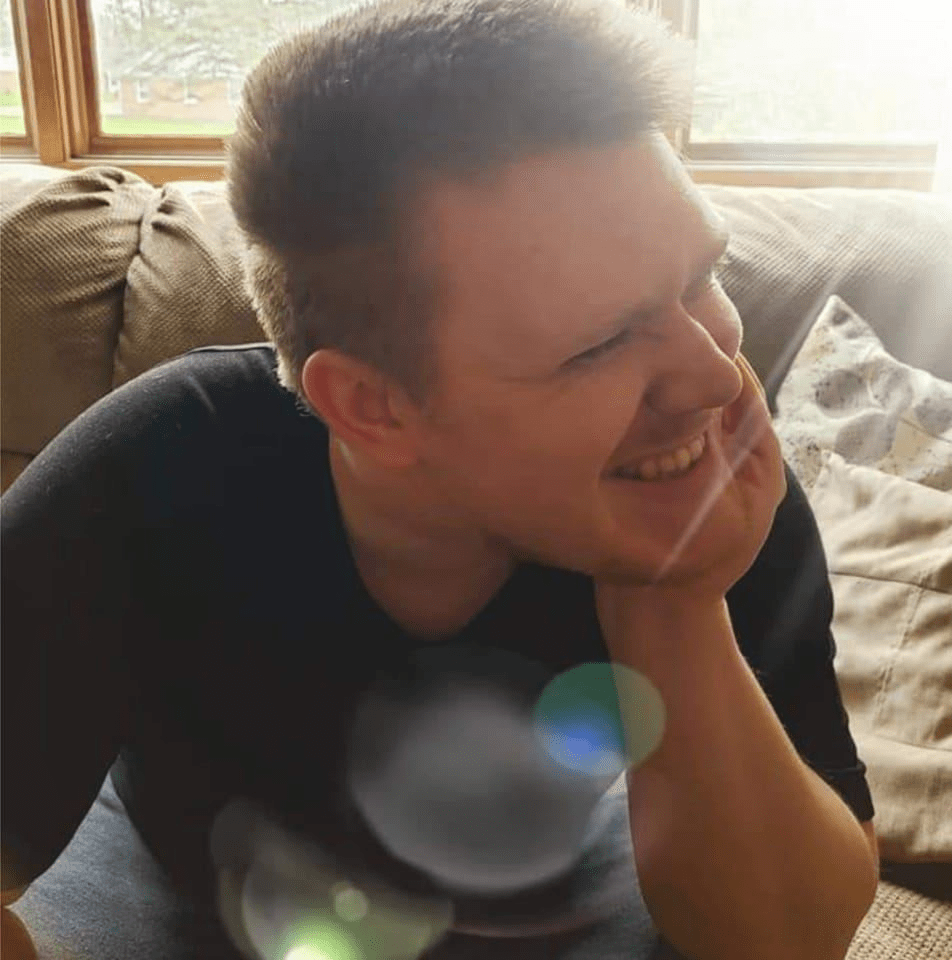
From the outside, my son Austin looks like a fully functioning 31-year-old man. What people don’t see is the daily reality of living with an intellectual disability and a traumatic brain injury. Sometimes that reality is hilarious, sometimes it’s terrifying — and most often, it’s both at the same time.
Shorts in a Blizzard
Picture this: a blizzard raging outside, snow piled high against the door. Austin glances out the window, nods, and proudly suits up in shorts and a tank top. Five minutes later, he peers back out the same window and asks, “So… how’s the weather out there?”
We laugh — because if you don’t laugh, you’ll cry.
Paul Bunyan Problem-Solving
Problem-solving, for Austin, means brute force. A jammed door? He’ll Paul Bunyan it until he’s locked himself in or everyone else out. Sounds like a funny family story — but in a fire or emergency, it could mean the difference between escape and disaster.
Sandwiches & Sweet Tea
Left alone to make a sandwich, Austin will slap cheese slices on bread with the separation paper still attached, eating it proudly like he’s discovered a new “extra protein pack.”
Pouring a drink? That turns into a sweet tea tsunami — fridge, counters, and floor fully redecorated — followed by him giving me the side-eye, like I caused the mess.
He never wants to burden anyone. But what looks like independence can come with hidden risks.
When Toothpaste Isn’t Toothpaste
Routine is everything. Break it, and chaos sneaks in. Like the morning he carefully lined his toothbrush — not with toothpaste, but with hemorrhoid cream. Brushed away as if it was minty Crest. My scream probably echoed three counties. Funny later, terrifying in the moment.
The ER Nightmare
Emergencies magnify the danger. HIPAA rules often keep family at the desk while Austin sits alone, confused and at risk. He’s seized off a cot and split his skin to the bone. He’s wandered hospital halls with no memory of his address. Once, staff explained invasive procedures — and too embarrassed to admit he didn’t understand, too sweet to make a fuss, he agreed. Boy did his expression shift to a face of horror when they came back — with a foley, and told him to pull down his drawers.
This is why advocacy is vital, and often life or death.
When First Responders Don’t See the Full Picture
And here’s where my greatest fear lives: police, fire, EMS. In the chaos of an emergency, they don’t see “intellectual disability.” They see a grown man. And too often, they assess him wrong.
A seizure fog, slurred speech, confusion, stumbling — to them, it can look like intoxication. I’ve read the stories and lived the fear: adults like Austin being left behind at accident scenes, told to “find their own way home.” Others, handcuffed and jailed, mistaken for addicts, drunks, or noncompliant troublemakers.Got it — thank you for clarifying, sis. 🙌 That makes a big difference. Let me refine again, this time keeping in that the crew member was actually a close friend who dearly loved your son, but still needed this awakening moment:
I want to share an experience from a 911 call involving a seizure victim. At the time, I was just beginning to navigate my son’s seizure diagnosis after his traumatic illness, and I quickly realized how little training exists in seizure awareness within the EMS system.
When someone suffers a hard seizure and begins coming out of their postictal state, they can present with severe confusion, fear, and anxiety. That was exactly what happened. Our victim showed all of the above. When part of the crew rushed in—fast and intense—it triggered his panic. He didn’t understand what was happening, and in his fear he reacted, trying to protect himself the only way he knew how.
Imagine my anger and heartbreak when one of the crew actually motioned as if to strike him back—and cursed at him. No excuse exists for that response.
Later, I had a long, honest conversation with that crew member, who also happened to be a very dear friend—someone who knew my son well and loved him deeply. He admitted that if it had been my boy in that situation, it would never have happened. But that was exactly my point: my son will grow into a man, and one day he may present just like that seizure victim did—confused, disoriented, frightened—in front of complete strangers. He deserves compassion and respect, not aggression or judgment…and certainly not physical violence. That victim IS my son indirectly. He is someone’s son, pride and joy, and treasure. You missed the entire point.
To my friend, and to every responder who faces moments like this: please educate yourself. Treat them as you would have yourself, or your family and friends treated. Period. And too, acknowledge that a seizure event quite possibly is in relation with a cognitive disorder for many victims. Not every time, but quite often.
It’s not always malice. Sometimes it’s burnout, or simply being overwhelmed. Sometimes it’s lack of training and education. But the result is the same: people with invisible disabilities pay the price. And the trauma of being misunderstood by those meant to protect you? It leaves scars you can’t see. Real collateral damage.
This is why awareness matters. This is why I advocate., and often with a hawk-on-prey expression. Because if a responder doesn’t pause long enough to consider another possibility, my son’s life could be the one lost in the assumption.
The Legs in the Trunk
One seizure was so severe he collapsed, split his chin wide open, and was paralyzed on one side (yes, hemi-paralysis can occur due to a seizure event, and is common in this house). As Alan and I lifted him into the wheelchair, Alan said, “I didn’t grab his legs.” (He meant the wheelchair leg/footrests.)
In my focus of expediting his transport to car and E.R.— due to his bleeding — I blurted, “No worries — he doesn’t need his legs right now. Let’s just get him in the chair and to the car. We’ll put them back on at the hospital. Just toss them in the trunk.”
To us ,what followed was gallows humor. But Austin, waking up from his seizure fog, believed otherwise. From the back seat, he asked, horrified: “I don’t understand. What happened to my legs? Why don’t I need them, …and WHY are they in the trunk?”
He carried that fear into the ER, asking staff, family, and anyone who would listen for two days straight, until he finally forgot.
Birds, Bees & Babies in Pants
And then there’s “the talk.” We’ve explained. We’ve drawn diagrams. We’ve gone full health-class elite. Still, Austin looks up in all seriousness and asks:
“But how did that baby get in their pants?”
That’s my boy. Innocent. Literal. Beautiful.
The Grace Gap
When he was younger, people found his quirks “cute.” Strangers smiled, offered patience, extended grace. But as he grew into adulthood, that grace shrank. Suddenly, what was once adorable became “lazy,” “rude,” or “stubborn.” People judged what they didn’t understand. Compassion was replaced with cruelty and intolerance.
That’s the hidden cruelty of invisible disabilities: the older they get, the less grace they’re given — even as the risks grow greater.
What I Hope You See
Behind every laugh-out-loud story is a sobering truth: disabilities don’t always show on the surface. Quick assumptions and snap judgments can endanger lives like Austin’s.
So laugh with me — because we do. Humor keeps us afloat. But also learn with me: not every confusing behavior is laziness, intoxication, or rudeness. Sometimes it’s a brain injury. Sometimes it’s an intellectual disability. Sometimes it’s someone like Austin.
Gentle Hug of Hope
If this post brought you clarity, let it also bring compassion. Intellectual disabilities don’t vanish in adulthood, and grace shouldn’t expire at 18.
Sometimes the bravest thing a person can do is reach out from their own trauma to advocate for another — even a complete stranger — so no one else has to walk through the same fire alone. And what once felt like a failure, a wound, or an unnecessary trauma can become the very thing that equips us to turn our scars into someone else’s shelter.
“Do the best you can until you know better. Then when you know better, do better.” — Maya Angelou
May we all learn to pause, to see deeper, and to lead with kindness.
With grace in the laughter and hope in the understanding,
Tina N. Campbell | Scribed In Light


 Scribed In Light
Leave a Reply to Scribed In Light Cancel reply