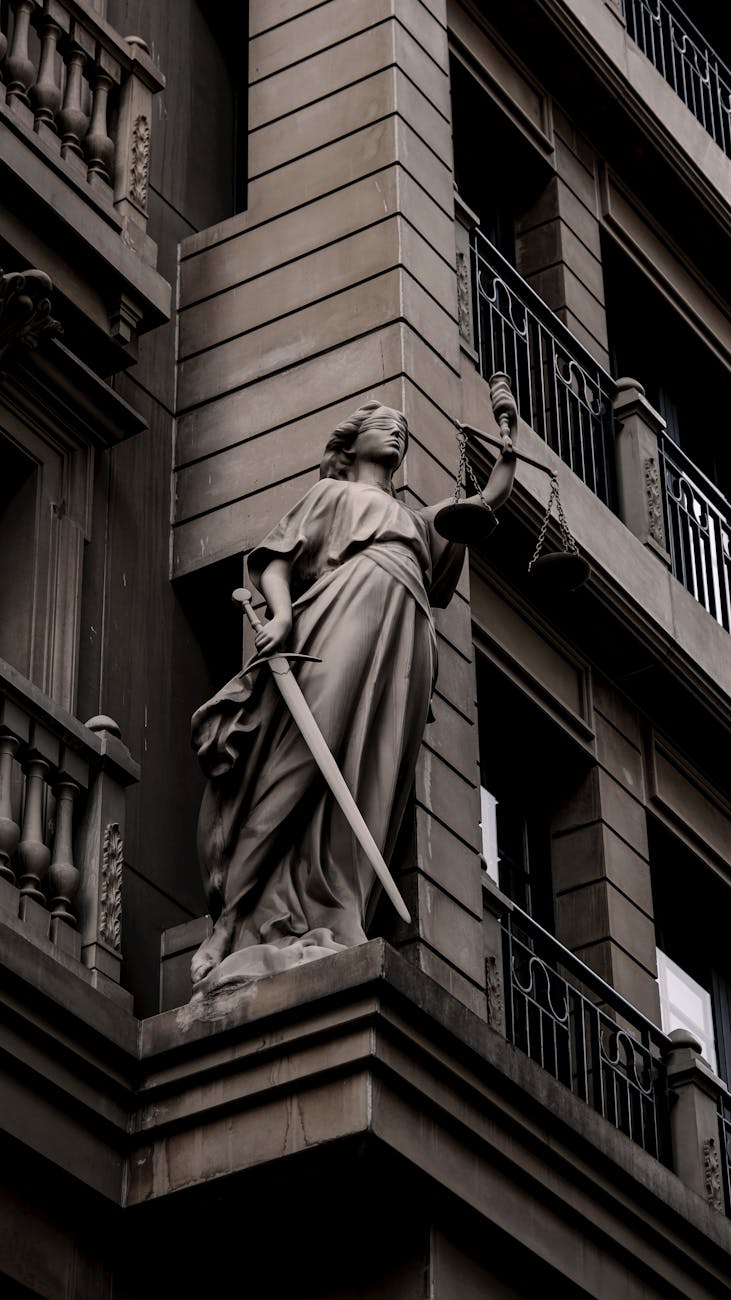
Civil Fear, Fractured Trust, and the Cost of Silence
There is a reason so many people feel unsettled right now — not just politically or socially, but existentially.
It is not one incident.
It is not one agency.
It is not one side.
It is the convergence of fear, silence, and unaccountable power — and the way society is beginning to fracture under its weight.
Across the country, highly visible enforcement actions and public confrontations have seeded widespread anxiety. People are afraid not only of wrongdoing, but of being near it — of being present in the environment where it unfolds. Presence alone can be misinterpreted. Simply standing nearby, witnessing an encounter, recording what is happening, or helping an innocent human being caught in the collateral can be reframed as interference, provocation, or guilt.
That shift changes everything.
At the same time, something more insidious is occurring.
When individuals call out what they perceive as injustice — illuminating moments that feel misaligned with restraint, accountability, or humanity — they are increasingly met with hostility. Not inquiry. Not examination. But attack.
Those who speak are accused of provoking unrest.
Those who question are told they should have looked away.
Those who stand for rights and justice are warned, implicitly or explicitly, that silence would be safer.
And so society turns inward.
When Redress Becomes Elusive
In moments of conflict or harm, people are often told to trust the system.
To pursue remedies.
To seek counsel.
Yet an uncomfortable reality is emerging:
Access to meaningful redress has become increasingly difficult for ordinary citizens.
Not because harm never occurs.
Not because rights are never compromised.
But because accountability itself is often structurally discouraged.
When avenues for challenge narrow — when questioning authority carries social, professional, or personal cost — a right without a remedy becomes little more than a theory.
In that vacuum, misconduct does not need to be justified.
It only needs to remain unchallenged.
And silence, once again, becomes functional protection.
Not for the vulnerable — but for the system.
From Institutional Fracture to Social Unraveling
Fear does not stay contained within institutions.
When people believe power can act without accountability — and that there is no reliable path for recourse — trust collapses outward. Society begins to fracture internally.
One person calls for justice.
Another insists proximity alone justifies force.
One sees a human being caught in a moment.
Another sees acceptable collateral.
This is the fracture.
Civil unrest does not arise only from tension between citizens and authority. It grows when shared moral ground disappears — when people no longer agree on whether innocence deserves protection at all.
When witnessing is reframed as provocation…
When compassion is treated as interference…
When refusing to look away is labeled a liability…
Innocence becomes conditional.
And once collateral harm is normalized — once injury, loss, or death is rationalized as an acceptable cost — there is no principled stopping point.
That is how societies unravel.
Why the Fear Feels Familiar
Some observers have drawn comparisons to historical moments when silence became survival and witnessing carried risk — not as equivalence, but as warning.
Not because history repeats itself in form, but because it rhymes in mechanism.
When people are taught it is safer not to see.
When recording becomes suspicious.
When presence itself invites consequence.
When truth must be hidden to avoid punishment.
The danger is not immediate tyranny.
The danger is normalization.
History shows us that fear rarely begins with violence. It begins with justification — with the slow teaching that some people are expendable, some voices are inconvenient, and some truths are better left unspoken.
That lesson is never as distant as we assume.
When Illumination Is Punished
Perhaps the most destabilizing element of this moment is not only what is happening — but how society responds to those who name it.
Some people illuminate what they see as injustice.
Others attack the act of illumination itself.
Those who speak are dismissed.
Those who question are ridiculed.
Those who stand for rights and justice are treated as threats rather than participants in a shared civic responsibility.
Meanwhile, fear escalates — unacknowledged and unresolved.
Some leaders and officials respond with restraint, transparency, and accountability. Their actions demonstrate that authority and justice are not opposites.
Others respond to calls for accountability with intimidation — treating advocacy itself as hostility.
That response does not restore order.
It confirms the fear.
And when fear goes unacknowledged, it does not dissipate.
It multiplies.
What Responsibility Still Looks Like
There may be no single solution to this moment. But there are responsibilities that cannot be abandoned without consequence. This conversation is not about ideology. It is about whether ordinary people can trust that fairness still exists.
Being part of the solution does not require certainty.
It requires presence with discipline.
It looks like this:
- I will stay present without escalating.
- I will speak carefully, not recklessly.
- I will refuse to dehumanize—even when I am afraid or angry.
In practice, that means:
- Witnessing without interfering
- Speaking without shouting
- Questioning without assuming guilt
- Holding space without spreading fear
- Refusing false binaries that insist silence or aggression are the only options
This is not passivity.
It is disciplined restraint.
Systems change slowly.
Culture changes faster.
And culture is shaped by what ordinary people are willing to tolerate, repeat, excuse — or quietly refuse.
If we are not willing to be part of the solution at this level, we should not be surprised when the problem deepens.
Closing Reflections
“The only thing necessary for the triumph of evil is for good people to do nothing.”
— Often attributed to Edmund Burke
“In a time of deceit, telling the truth is a revolutionary act.”
— George Orwell
Silence protects systems. Illumination protects people.
Author’s Note
This reflection is offered in good faith, with care for both truth and humanity. I’m sharing it because what we are witnessing is deeply concerning—not as isolated moments, but as an emerging pattern that continues to go largely unacknowledged. Illumination matters here. Without transparency and honest examination, fear deepens, accountability erodes, and the fracture widens. This is written not to inflame, but to bring clarity—because what remains unseen and unexamined will only continue to crumble.
History teaches. Conscience guides.
And truth, even when costly, remains worth protecting.
Unaccountability multiplies in silence.
Trust rebuilds in light.
Let us be steady. Let us be disciplined. Let us refuse to surrender what is right simply because it is difficult.
Choose wisely what you normalize.
Choose carefully what you excuse.
Choose deliberately what you refuse.
You are seen. You are responsible. And your presence matters.
Standing with you in clarity and resolve.
“Have nothing to do with the fruitless deeds of darkness, but rather expose them.” —Ephesians 5:11
Tina N. Campbell
Scribed in Light
 Scribed In Light
Leave a Reply